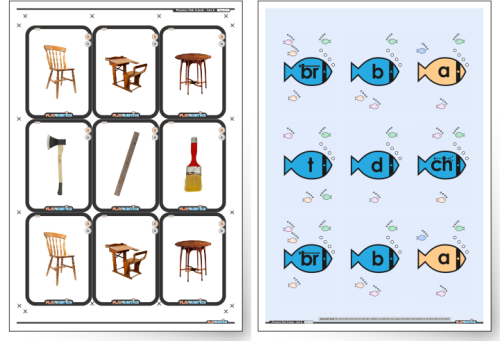
While many people naturally desire the ability to read, this desire is entirely separate from being motivated to learn the essential skills and information that reading requires.
For example, memorizing the sound represented by the letter ‘t‘ is crucial for reading, yet many learners won’t find memorizating this to be immediately rewarding. In fact, many learners may not even understand why their teacher is teaching them this information, as they often won’t grasp its value until many months (or years) later, when they finally have become capable enough at reading to be able to appreciate the intrinsic enjoyment and benefits of reading.
On the other hand, individuals are generally intrinsically motivated to engage in games. Seeing colorful game materials or observing others having fun playing a game usually spark an instinctive desire to learn the minimum knowledge needed to participate. The engaging nature of games, along with the potential satisfaction of winning, offers immediate rewards after just 5-15 minutes of learning the basic skills required for participation.
Thus, rather than relying solely on extrinsic motivation to coax learners through each step of the reading-learning process, the gamified approach provided in the activities on this page fosters an intrinsically-driven cycle of learning. Participants discover that their efforts yield immediate rewards after short bursts of effort, measured in minutes instead of months or years.
By incorporating phonics practice into enjoyable games that feel more like play than study, students develop a genuine eagerness to practice essential reading skills and learn the sounds produced by letters and letter combinations.