Replication Exercises

Deduction-Cards-Header-Examples 01

About This Activity Type

Overview

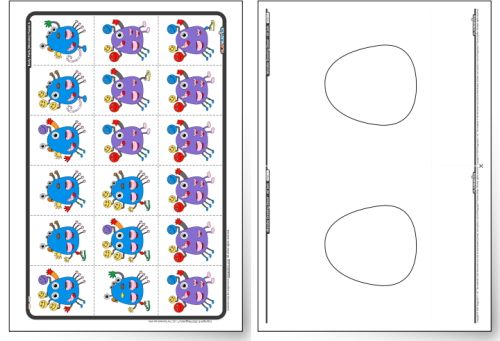
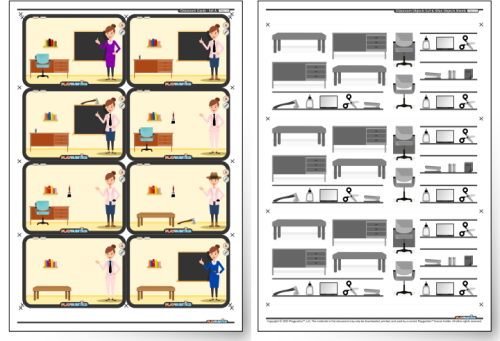
For these activities, students work in partner-pairs, with one partner describing the appearance of an image (or a 3-dimensional sculpture) while the other partner attempts to replicate the image based solely on the two partners’ verbal communication.

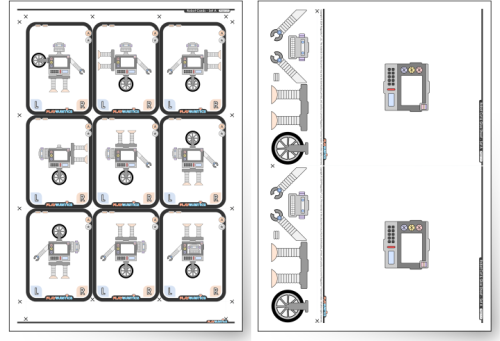
Depending on the activity, there are different modes of replication, including drawing a picture, organizing tiles to recreate the image, cutting & gluing objects or shapes printed on a sheet of paper, or even using LEGO or other physical materials to build a 3-dimensional structure.


Methodological Basis

The activities listed on this page are all information-gap activities, which serve as communication practice exercises within the Communicative Language Teaching (CLT) and Task-Based Language Teaching (TBLT) methodologies.

However, unlike Deduction Challenges (which are especially suitable for English language beginners as they only require the use of a few sentence patterns and a relatively concise list of vocabulary words), the Replication Exercises featured on this page are ideal for intermediate-level learners, as they provide an opportunity for varied and open-ended communication practice.

To successfully complete these exercises, activity participants will need to accurately use various prepositions, verbs, and adjectives to precisely communicate the location, size, and condition of different elements and objects.




Activity Versions

There are four different types of Deduction Challenges that can be implemented for most sets of materials.

  • Pair Practice (Speaking)
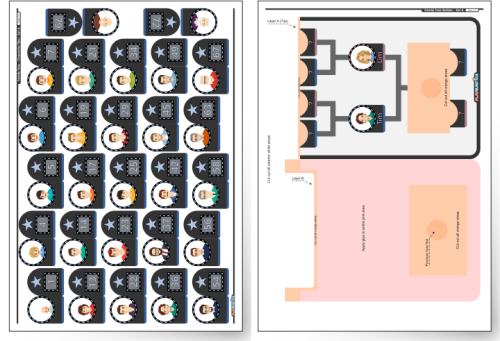
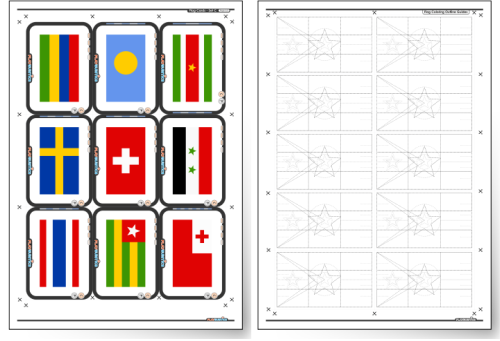
    Two partners can work together, taking turns being the asker and the answerer. For each round, the answerer draws a card from the secret card deck, while the asker crosses off possibilities on a deduction panel or deduction table.

  • Pair Practice (Writing)
    Instead of communicating verbally, the partner with the secret card must write a detailed description of the content on the card. Upon receiving their written description, the other partner must try to determine which possibility on their deduction panel is the best match. To ensure efficient use of time, both partners can each write descriptions about a different secret card simultaneously and then exchange their written descriptions when they are ready.

  • Group Partner Matching
    A group of learners (preferably 16 or more participants) each draw a card from a deck that contains exactly two copies of each card. When the round begins, each participant must find the person who has the matching card. This can be done as a competition with the first two participants to find their match being the winners. Alternatively, each round can continue until all participants have found their match.

  • Competitive Team Play
    For activities with more than 60 total cards across all available card sets, competitive team Deduction Challenges can be conducted. Each team receives a combination of several card sets, forming a single super deck. Teams designate one team-member as their answerer, who draws a card from a separate secret card super deck. The answerer can view the secret card and respond with yes or no to their teammate’s questions, but cannot show the card to anyone else. Once the round begins, each team competes to be the first to identify which of their 60 or more cards matches the secret card held by their designated answerer.