Role-Play Materials

Deduction-Cards-Header-Examples 01

About This Activity Type

Overview

Use of the printable sets of Role-Play Materials shown on this page provide structure for authentic verbal interactions and exchange of goods that closely simulate real world communication. The format of the materials it quite varied, from realistic and modular props that allow fast-food orders to be assembled to card-based role-play systems that provide structure to (otherwise overly complicated) role-play topics so that students can  build their confident by following a commonsense step-by-step process for completing the interaction.


Methodological Basis

Role-play activities are a type of communication practice exercise used regularly under the communicative language teaching (CLT) methodology as one of six common classroom activity types. These activities allow teachers and students to engage in a form of (primarily) verbal communication that approximates authentic real-to-life communication. 

One our core goals while creating the resources listed on this page was to make authentic role-play speaking activities accessible to even beginners and near-beginners. Many of the available activities are designed to not be open-ended in format, allowing learners to succeed at completing the role-play exercises with a very minimal level of pre-learning required.

This approach aids in building confidence and providing enough repetitions of speaking practice for the learners to make quick progress in their ability to speak English.


Activity Versions

Our approach to creating role-play materials falls into two categories.

  • Creating Realistic Communication Experiences

    The many goal of many of our role-play kits is to provide realistic objects for all of the noun needed to role-play making and fulfilling requests, such as placing and preparing restaurant orders, getting help while shopping at a grocery store, or preparing the necessary. Providing realistic objects for specific role-play interactions is very effective at helping students connect real-world meaning to English words and phrases.

    For example, if a student asks for a hamburger during a restaurant role-play exercise, there should be an object available that accurately resembles an actual hamburger, as well as realistic objects that resemble the toppings they might want on their hamburger. If the appearance and means of interacting with the objects is realistic enough, learners’ practice communication will feel almost indistiguistable from communicating about an actual hamburger and real toppings.

  • Ensuring Student Use Of All Target Vocabulary Words
    For role-play interactions like visiting a doctor, students often stick to what they know the best. This means that they’ll only communicate symptoms that they have no trouble remember the vocabulary words for. Many of the role-play kits featured below will allow teachers to ensure that students will need to make use of all the target vocabulary connected to the activity.


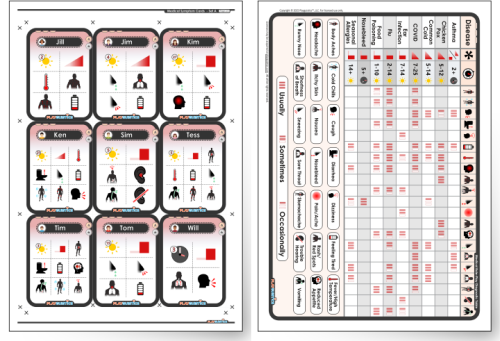
    For example, in our printable Medical Role-Play resource set, 18 Character Cards are provided, each with a unique combination of symptoms. By working their way through all of the cards, participants will have an opportunity to practice using every word on the activity’s vocabulary list.

Animals

Basic Deduction

Bedrooms

Scene-Based Deduction

Beverage Preferences

Preferences-Based Deduction

Body-Part Monsters

Character-Based Deduction

Body-Part Robots

Character-Based Deduction

Career Monkeys

Character-Based Deduction

Career Preferences

Characteristics/Preferences Deduction

Classrooms

Scene-Based Deduction

Classroom Objects

Basic Deduction

Clock Times

Basic Deduction

Clothing (Monkeys)

Character-Based Deduction

Clothing (School)

Character-Based Deduction

Colors

Basic Deduction

Colors (Books)

Characteristics-Based Deduction

Color Preferences

Preferences-Based Deduction

Country Clues

Characteristic-Based Deduction

Donuts

Characteristics-Based Deduction

Flags

Characteristics-Based Deduction

Flight Reservations

Characteristic-Based Deduction

Foods

Basic Deduction

Fruit Preferences

Preferences-Based Deduction

Hair Styles

Characteristics-Based Deduction

Hobby Clubs

Membership-Based Deduction

Hobby Preferences

Preferences-Based Deduction

Houses

Basic Deduction

Instruments

Basic Deduction

Instrument Preferences

Preferences-Based Deduction

Kitchens

Scene-Based Deduction

Kitchen Tools

Basic Deduction

Medical Symptoms

Basic Deduction

Money

Basic Deduction

Nutrition & Color

Characteristics-Based Deduction

Pizza Preferences

Preferences-Based Deduction

Restaurant Orders

Characteristics-Based Deduction

School Subject Preferences

Preferences-Based Deduction

Shapes

Basic Deduction

Tech Connections

Connections-Based Deduction

Travel Modes

Connections-Based Deduction

Travel Preferences

Preferences-Based Deduction

Travel Mode Preferences

Preferences-Based Deduction

Travel Routes

Map-Based Deduction

Vehicles

Basic Deduction

Vegetable Preferences

Preferences-Based Deduction

Washrooms

Scene-Based Deduction

Weather (Simple)

Basic Deduction

Weather (Single Day)

Schedule-Based Deduction

Weather Verb Tenses

Grammar-Focused Deduction

Weather Preferences

Preferences-Based Deduction