Bingo-Format Games

Deduction-Cards-Header-Examples 01

About This Activity Type

Overview

The activities in our collection of Bingo-Format Games are based on the classic bingo game, where the goal is to complete a straight line across the tiles on a game card. These games are particularly beneficial for learners who are not yet comfortable speaking, as they help build confidence through active listening skills. The complexity of the activities varies; some games only require participants to recognize individual vocabulary words, while others involve attempting to understand detailed descriptions of buildings, creatures, clothing, and objects.

Depending on the specific game, participants who serve as the bingo caller will engage in speaking practice that includes vocabulary pronunciation, phonics decoding, and/or sentence construction.


Methodological Basis

Using bingo games creates an engaging format that naturally encourages participants to pay close attention to the information being shared. This gamification of what would otherwise be a repetitive speaking/listening drill increases learners’ willingness to put in sustained effort compared to their engagement during comparable non-gamified practice drills for the same skills and content. 

This games within this activity type offer participants various opportunities for listening-based vocabulary recognition, sentence comprehension, phonics decoding and encoding, and practicing how to ask clarifying questions tailored to specific situations. 

Because bingo games require a bingo caller, they provide a unique opportunity for differentiated learning within an inclusive group activity. Learners with more advanced skills can take turns serving as the bingo caller, while students not ready for that challenge level can still utilize their listening skills to fully participate in the game.

 

Activity Versions

This page features three different types of activities, ranging from those that require only basic listening skills (along with speaking skills for the bingo caller) to those that involve detailed verbal descriptions.

  • Vocabulary Recognition
    The simplest bingo games focus solely on vocabulary recognition. Learners listen to vocabulary words called out by the bingo caller, marking the corresponding tiles on their bingo card if one of the words appears.

  • Character Preferences
    A second set of games focuses on various characters’ preferences, using character cards that usually outline their likes and dislikes. For some topics, preferences may also range from “very interested” to “definitely not interested.” Learners listen to complete sentences to identify whether a character likes or dislikes a specific noun or gerund. They must also use their phonics skills to recognize and write each character’s name.

  • Detailed Descriptions
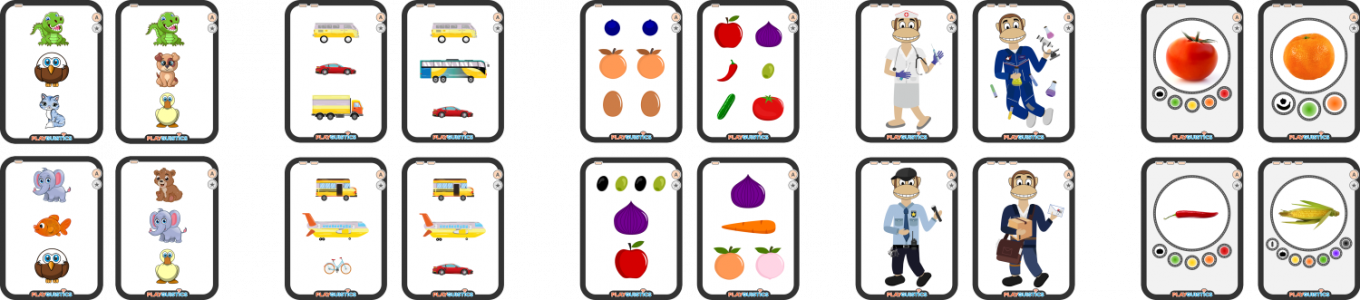
    The final type of bingo game features bingo cards tiles depicting similar but slightly different buildings, creatures, clothing outfits, and objects depicted on each tile. Participants must listen attentively to the bingo caller’s descriptions of the images on the cards drawn from the related card-deck and ask follow-up questions if the bingo caller’s descriptions lack sufficient details.